Free sample · first 11 of 104 pages
Look Listen Play
Singing & Microphone Skills for Students
A colorful practical beginner workbook

Sing comfortably • Handle the mic • Perform
NISMCAA | Book 12
Your singing journey
Your voice can tell a story and join other voices in music. You will learn easy singing, pitch and rhythm, clear words, microphone handling and a short original performance.
Use this book with a singing teacher and an adult sound operator for amplification. Your teacher chooses a comfortable key and range. Learn in short attempts, listen carefully and rest often.
My name: __________________________________
My school: __________________________________
My teacher: _________________________________
My first goal: _________________________________
How to use your book
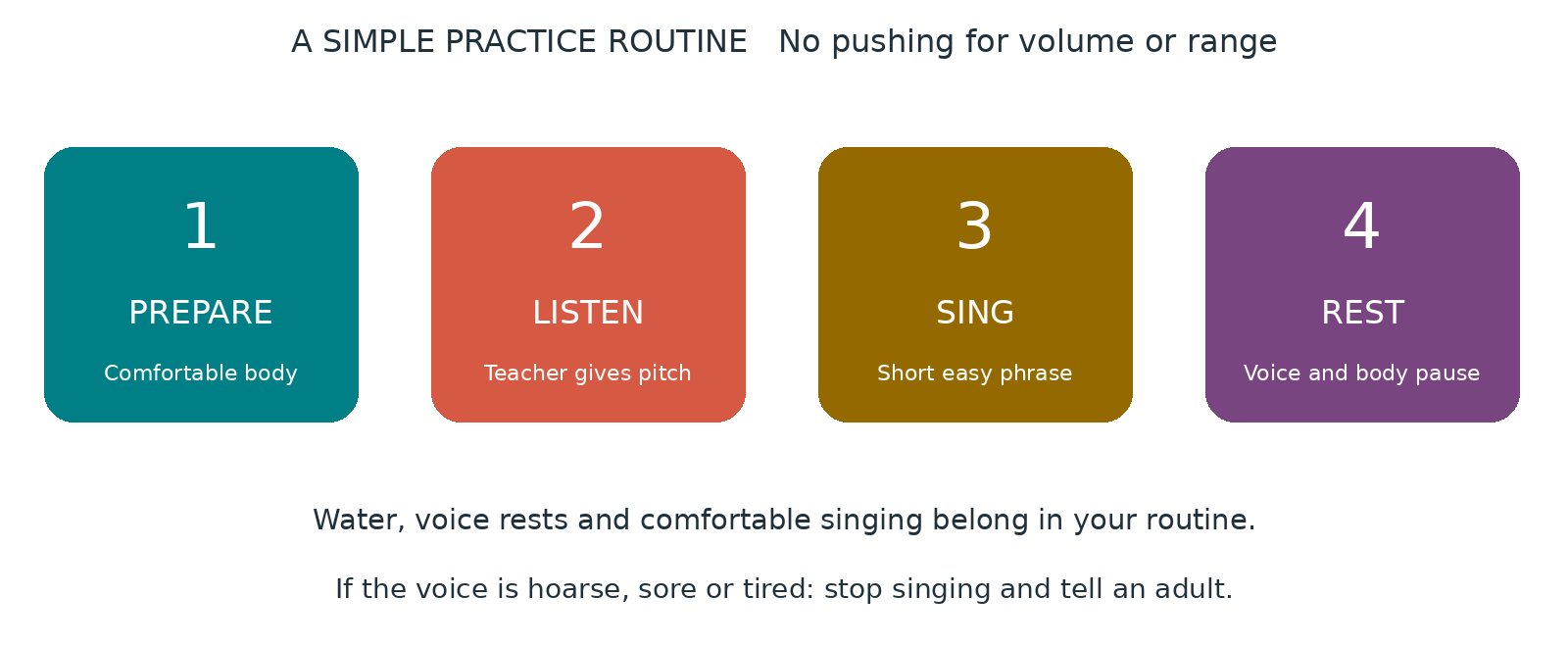
1. LOOK at the visual and find the skill being shown.
2. LISTEN to a teacher’s comfortable demonstration.
3. TRY the teaching steps, then the facing-page activity.
4. CHECK one thing and rest before trying again.
Never force loudness, pitch range or breath length. Stop for pain, dizziness or a hoarse or tired voice, and tell a trusted adult. If a task does not suit your voice today, listen, clap or adapt it with your teacher.
Your lesson route
Each lesson has a teaching page and a practice page. Tick a lesson when you can demonstrate its skill.
○ 01 Meet your singing voice · 9
○ 02 Understand how voice begins · 11
○ 03 Stand comfortably · 13
○ 04 Sing while seated · 15
○ 05 Take an easy breath · 17
○ 06 Breathe for a phrase · 19
○ 07 Prepare your body · 21
○ 08 Try a gentle hum · 23
○ 09 Explore a small glide · 25
○ 10 Understand pitch · 27
○ 11 Follow a pitch picture · 29
○ 12 Match one note · 31
○ 13 Repeat a note clearly · 33
○ 14 Sing two neighboring notes · 35
○ 15 Sing a three-note route · 37
○ 16 Explore five scale steps · 39
○ 17 Keep the beat while singing · 41
○ 18 Sing a quiet rest · 43
○ 19 Hold a two-beat note · 45
○ 20 Sing even eighth notes · 47
○ 21 Shape clear vowels · 49
○ 22 Give words clear consonants · 51
Reference and writing pages begin on page 97.
Your next lessons
Each lesson has a teaching page and a practice page. Tick a lesson when you can demonstrate its skill.
○ 23 Fit words to a tune · 53
○ 24 Tell the song’s story · 55
○ 25 Meet the microphone · 57
○ 26 Grip the microphone handle · 59
○ 27 Aim toward your mouth · 61
○ 28 Keep the distance steady · 63
○ 29 Adjust for a stronger phrase · 65
○ 30 Use a microphone stand · 67
○ 31 Complete a simple soundcheck · 69
○ 32 Know your safe stage space · 71
○ 33 Listen to the accompaniment · 73
○ 34 Turn and keep the mic aimed · 75
○ 35 Reduce popping sounds · 77
○ 36 Sing together in a group · 79
○ 37 Use call and response · 81
○ 38 Compose a short song · 83
○ 39 Remember a song in small parts · 85
○ 40 Build stage confidence · 87
○ 41 Prepare a complete performance · 89
○ 42 Listen to a practice recording · 91
○ 43 Care for voice and equipment · 93
○ 44 Choose your next singing goal · 95
Reference and writing pages begin on page 97.
See singing and mic control

SIDE VIEW: a balanced head, relaxed shoulders and an easy breath. Check that your feet and seat, when used, are supported.
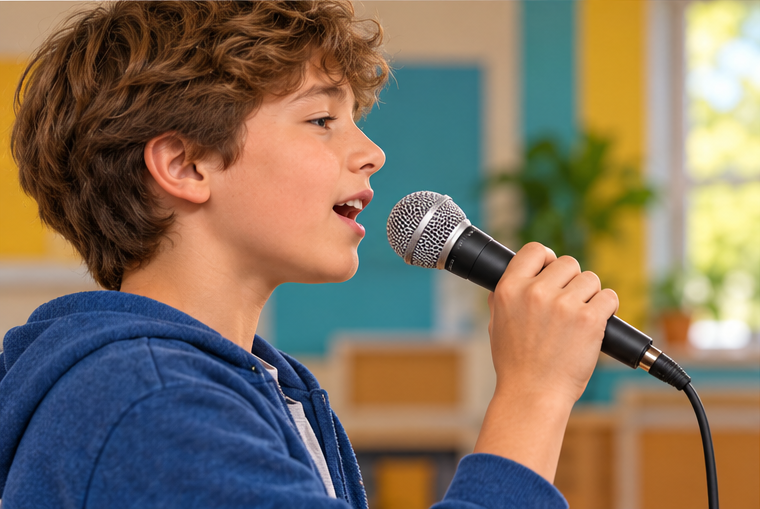
MICROPHONE VIEW: fingers hold the solid handle below the grille. The grille faces the mouth with a small gap, chosen at soundcheck.
Your voice and microphone
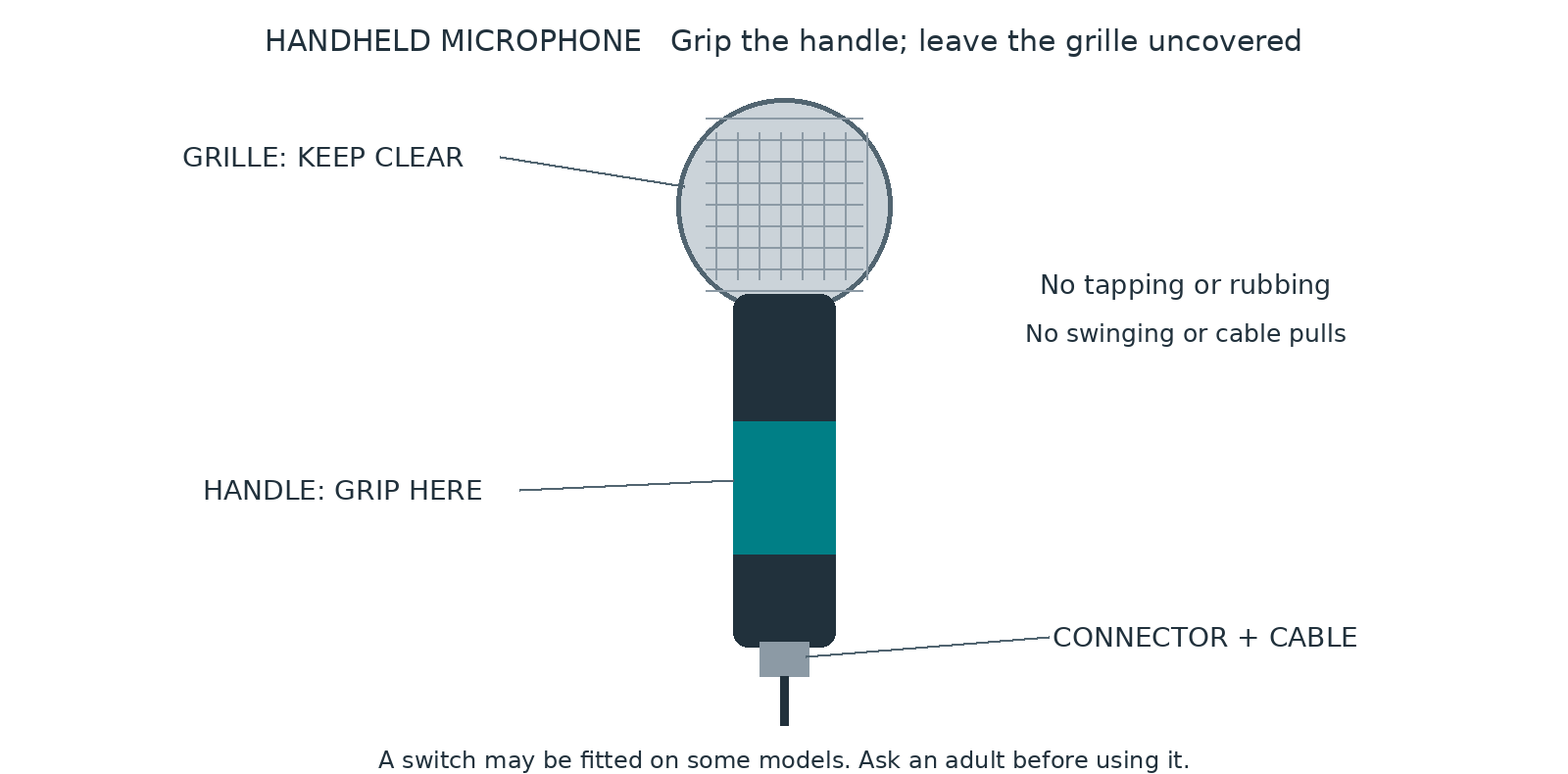
The microphone helps listeners hear the sound your voice already makes. Sing naturally and let the adult manage the amplification.
Read your visual maps
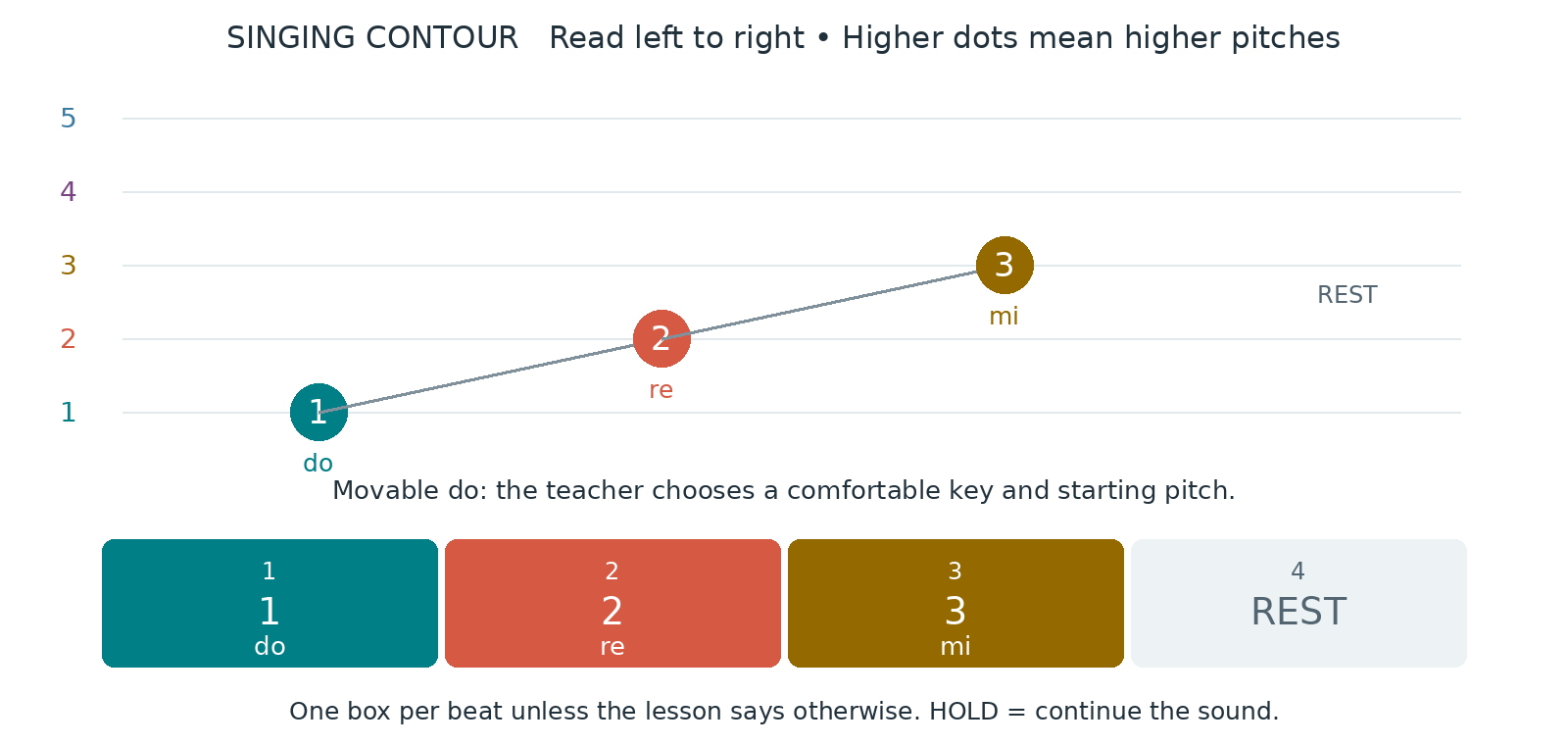
1. Read the dots and boxes from left to right.
2. A higher dot shows a higher scale step. Your teacher gives the actual pitch.
3. REST means silence
4. HOLD means continue the previous sound.
Movable do: 1 do, 2 re, 3 mi, 4 fa, 5 sol. These numbers are not fingers or permanent note names. Timing comes from the lesson instructions.
LESSON 01 • LOOK AND TRY
Meet your singing voice
Discover a musical instrument you carry with you.
1. Listen to your teacher sing a short phrase.
2. Say the same words in your comfortable speaking voice.
3. Sing an easy echo without copying an adult’s powerful tone.
Listen: A comfortable singing sound that is your own.
Check: ask your teacher about comfort, pitch, words and the skill being practiced.
LESSON 01 • SING AND CHECK
Try it yourself
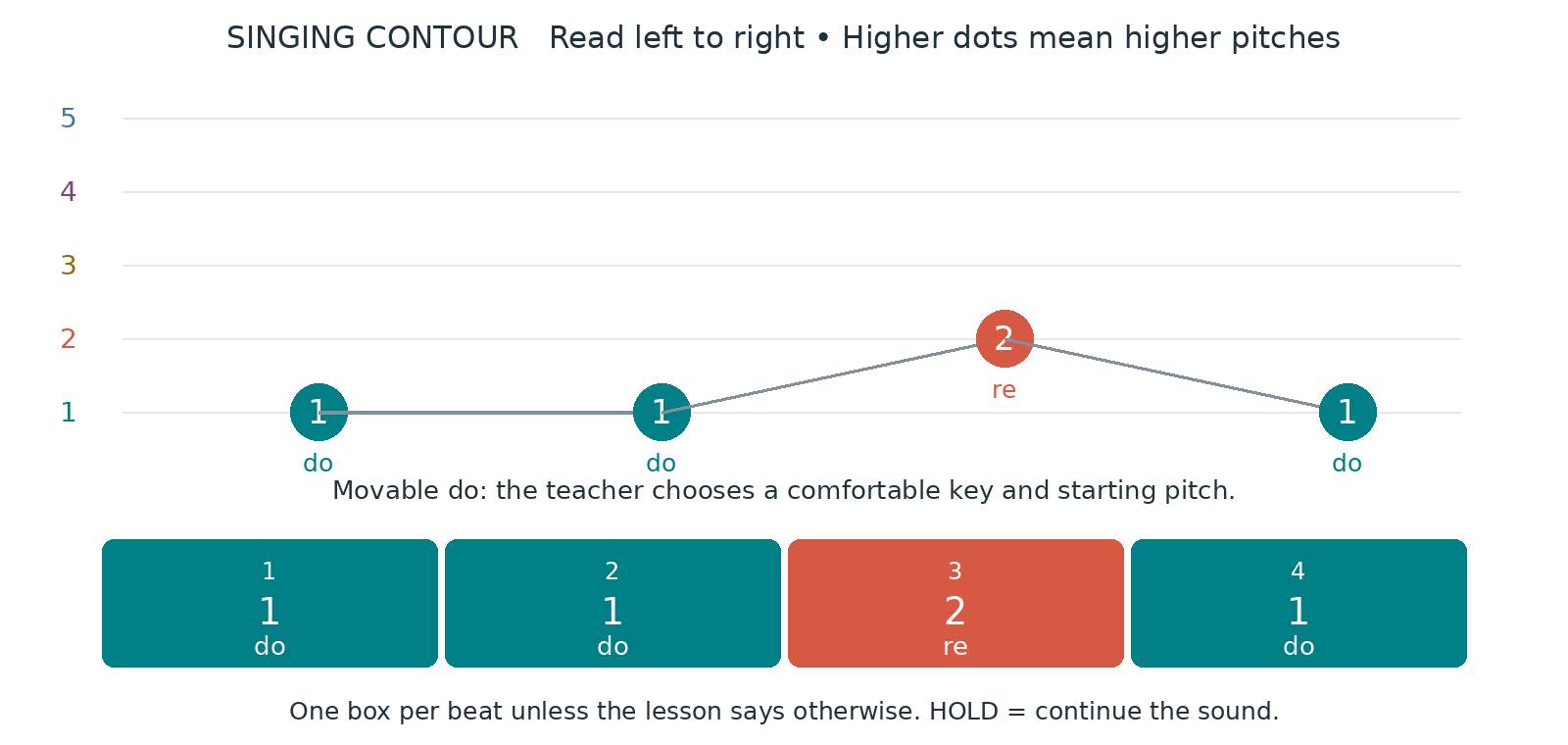
1. Describe how speaking and singing sound different.
2. Echo one short teacher-chosen note.
3. Sing a four-event route and rest.
Ready for more? Tell a partner one way voices can sound different.
School connection: Describing sounds and meanings practices clear language.
○ I tried it ○ I can show it ○ I want help
One thing I noticed: __________________________
My next small step: ___________________________
LESSON 02 • LOOK AND TRY
Understand how voice begins
Connect breath, vibration and words.
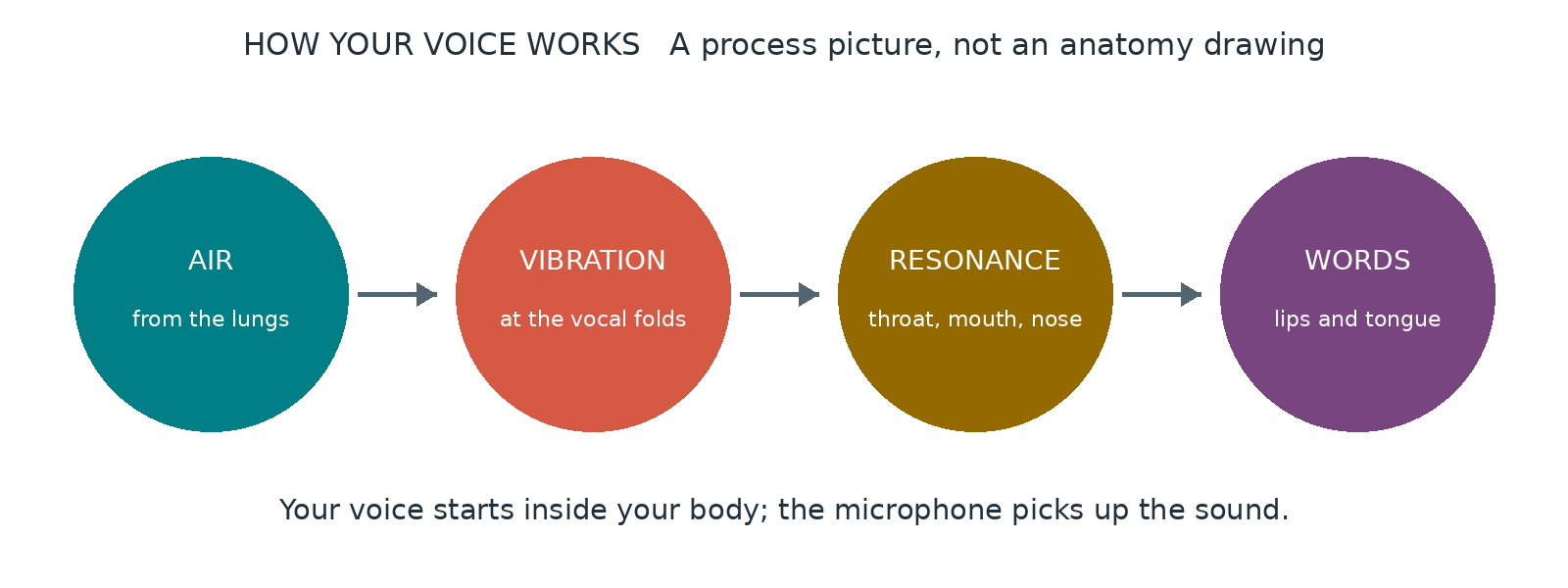
1. Air from the lungs passes through the voice box.
2. Vocal folds vibrate to make the sound of your voice.
3. The throat, mouth and nose shape the sound
4. Lips and tongue help form words.
Listen: A voice that feels easy, without squeezing the throat.
Check: ask your teacher about comfort, pitch, words and the skill being practiced.
End of your free sample
You have read the free sample of Singing & Microphone Skills for Students (11 of 104 pages).
Buy the complete book as a PDF download for $7.99 (USD). Secure checkout with Stripe; your download opens right after payment and a receipt is emailed to you.