Free sample · first 11 of 104 pages
Trumpet for Students
Look Listen Play
A colorful visual workbook for your first trumpet lessons
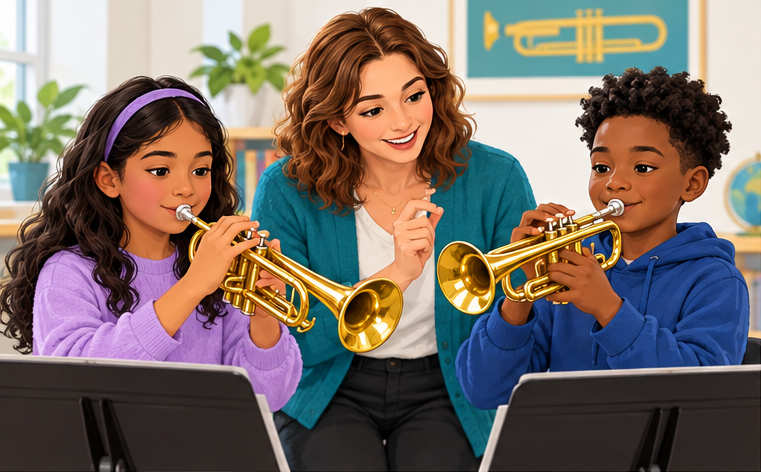
Look • Listen • Breathe • Play
NISMCAA | Book 7
Your trumpet journey
Learn to hold a B flat trumpet, make comfortable first sounds, use its three valves and play short melodies. Every lesson pairs a visual guide with a practical task. Learn at your own pace with a trumpet teacher.
This book uses written trumpet notes. C4 is the lower written C and C5 is the C an octave higher. Begin in a comfortable range. Learning a higher note picture does not mean you must play that note today.
My name: __________________________________
My school: __________________________________
My teacher: _________________________________
My first goal: _________________________________
How to use your book
1. LOOK at the picture and find the same places.
2. SAY the note names and count the rhythm.
3. TRY briefly with your teacher, then rest.
4. PRACTICE the next page and show what you learned.
Use short comfortable attempts with equal or longer rests. Stop if playing hurts or makes you dizzy. Your teacher adjusts position, mouthpiece contact and lesson pace. Keep your own mouthpiece clean and avoid sharing it.
Your lesson route
Each lesson has a teaching page and a practice page. Tick it when you can show its skill.
○ 01 Meet your trumpet · 9
○ 02 Choose a comfortable setup · 11
○ 03 Name the main parts · 13
○ 04 Fit the mouthpiece gently · 15
○ 05 Support with your left hand · 17
○ 06 Curve your right fingers · 19
○ 07 Stand with easy shoulders · 21
○ 08 Sit comfortably to play · 23
○ 09 Breathe without strain · 25
○ 10 Learn the lip shape · 27
○ 11 Try a short mouthpiece sound · 29
○ 12 Make your first trumpet sound · 31
○ 13 Find your first written C · 33
○ 14 Find your first written G · 35
○ 15 Count a steady pulse · 37
○ 16 Start a note gently · 39
○ 17 Hold a note for its length · 41
○ 18 Keep counting through rests · 43
○ 19 Read the valve pictures · 45
○ 20 Play written E · 47
○ 21 Play written D · 49
○ 22 Play written F · 51
Reference and writing pages begin on page 97.
Your next lessons
Each lesson has a teaching page and a practice page. Tick it when you can show its skill.
○ 23 Join your first five notes · 53
○ 24 Play your first short tune · 55
○ 25 Meet the treble staff · 57
○ 26 Hear different open notes · 59
○ 27 Play written A when ready · 61
○ 28 Play written B when ready · 63
○ 29 Meet the next written C · 65
○ 30 Explore the written C major scale · 67
○ 31 Understand your B flat trumpet · 69
○ 32 Join notes with a slur · 71
○ 33 Try a gentle lip slur · 73
○ 34 Count pairs of eighth notes · 75
○ 35 Change volume with control · 77
○ 36 Listen and adjust pitch · 79
○ 37 Learn about the third slide · 81
○ 38 Solve one sound problem · 83
○ 39 Play a musical conversation · 85
○ 40 Write your own short melody · 87
○ 41 Play with a classmate · 89
○ 42 Care for your trumpet · 91
○ 43 Prepare your small performance · 93
○ 44 Plan your next stage · 95
Reference and writing pages begin on page 97.
See two playing positions
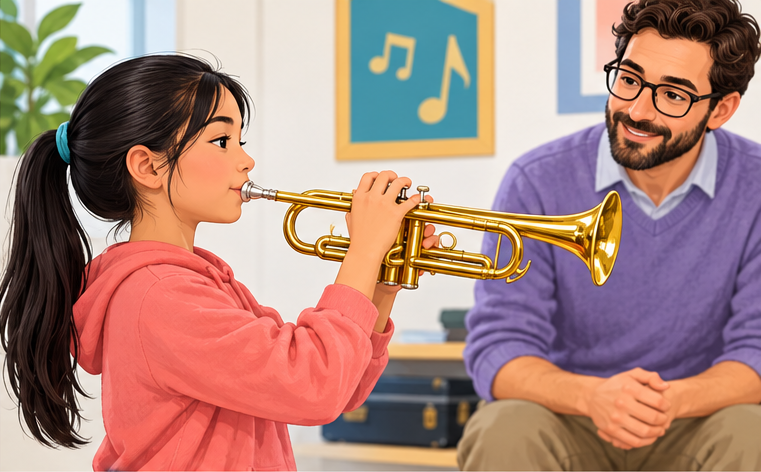
Side view: bring the mouthpiece to your lips, keep shoulders easy and let the left hand support the trumpet. Your teacher checks your own position.
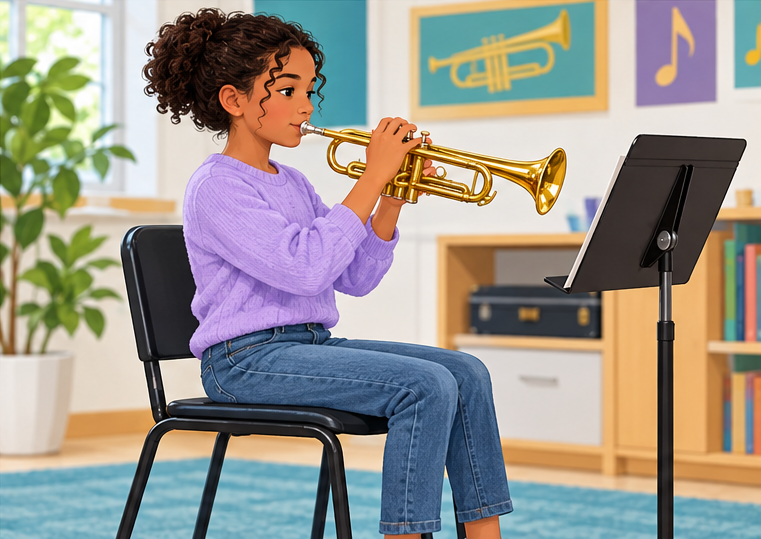
Seated view: stable chair, feet supported and music stand at a comfortable reading height. Rest before arms or lips become tired.
Read the valve pictures
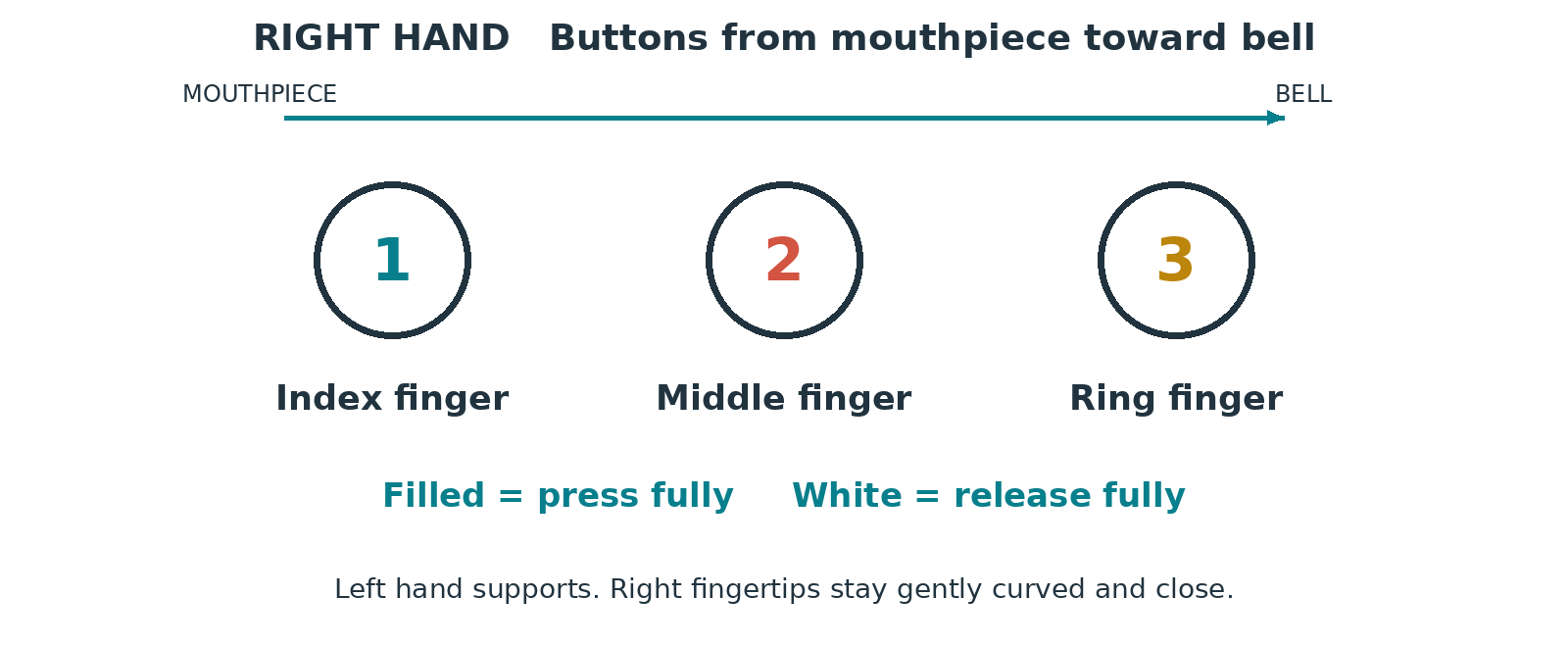
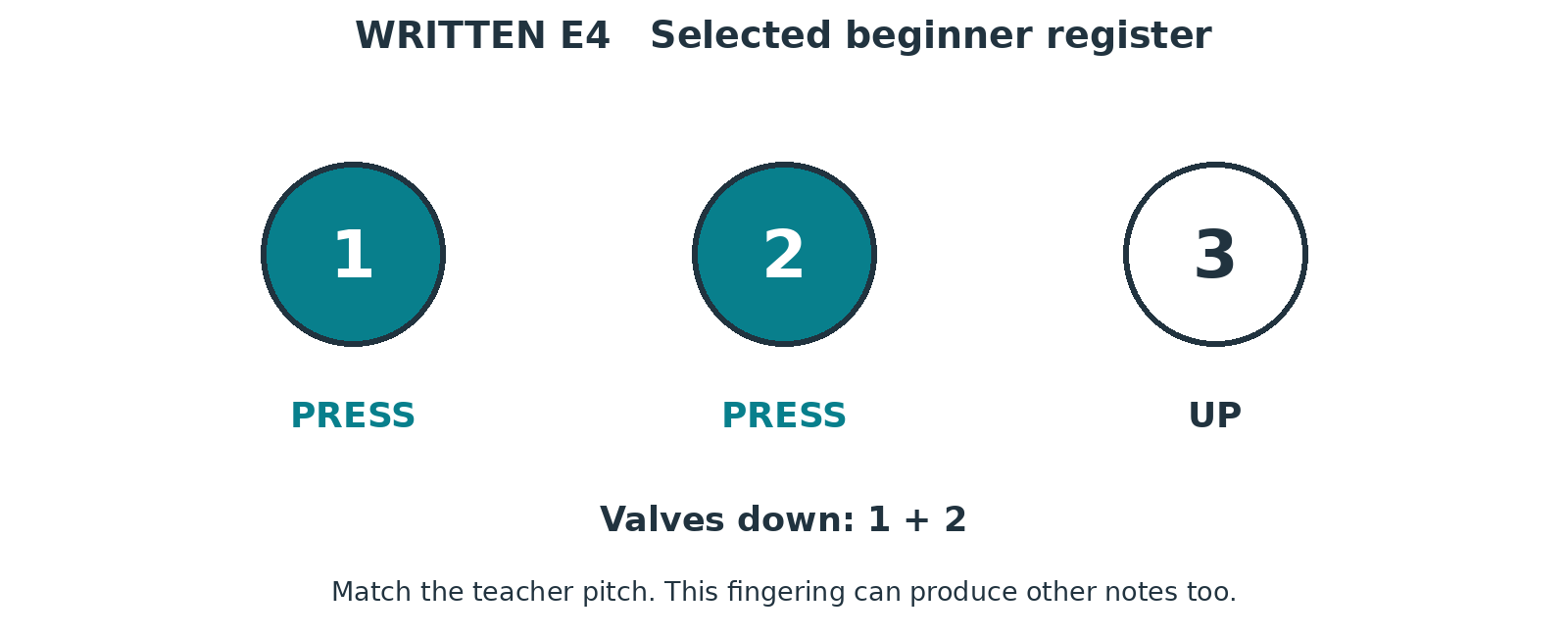
Valve 1 is closest to the mouthpiece. Your right index finger uses 1, middle finger 2 and ring finger 3. Filled circles mean press fully; white circles mean release fully.
This E4 example has 1 and 2 pressed and 3 up. The combination can also produce other notes. Listen and match the teacher to find the intended pitch.
Read a rhythm block
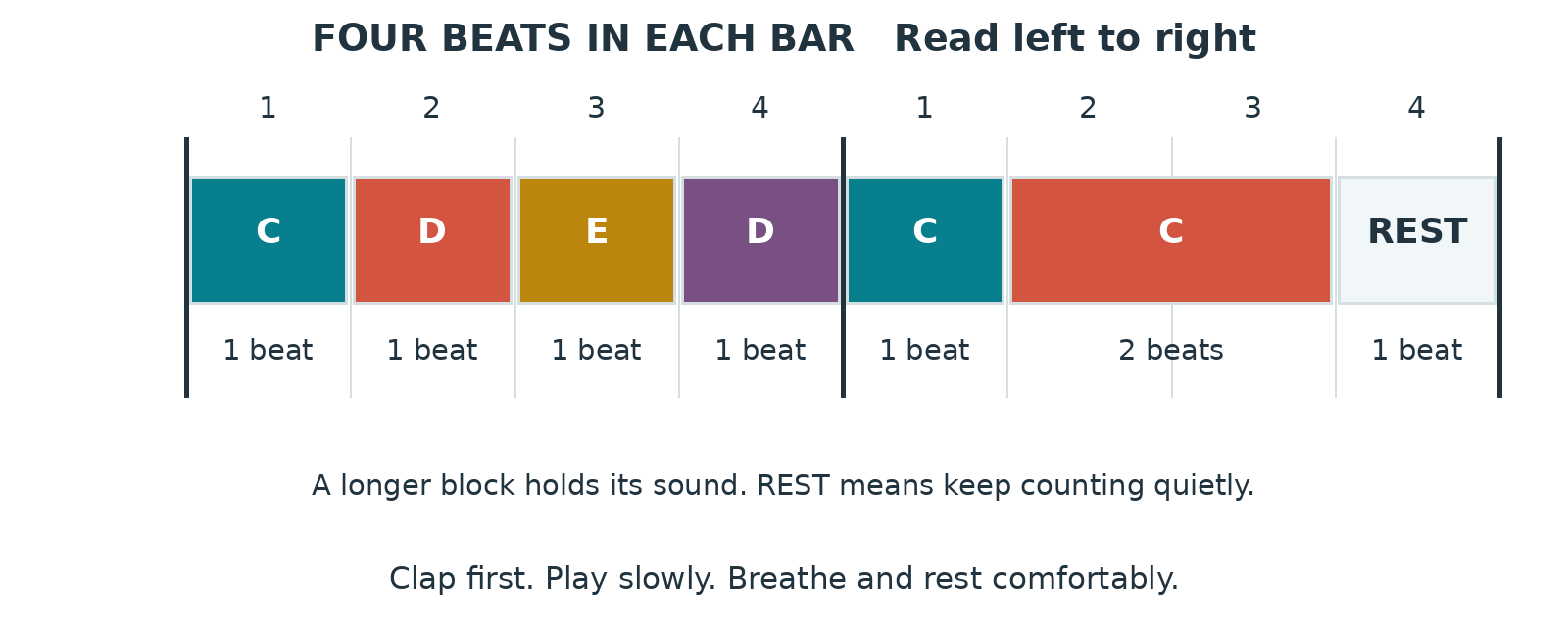
Each bar has four beats. Play a letter for the length underneath its block. A wider block lasts longer. REST means stay silent and keep counting.
Here: C D E D | C C for two beats REST. These are written trumpet notes. Speak, clap and finger first. The grids help you learn timings; they are not complete musical scores.
LESSON 01 • LOOK AND TRY
Meet your trumpet
Discover how a trumpet makes its voice.
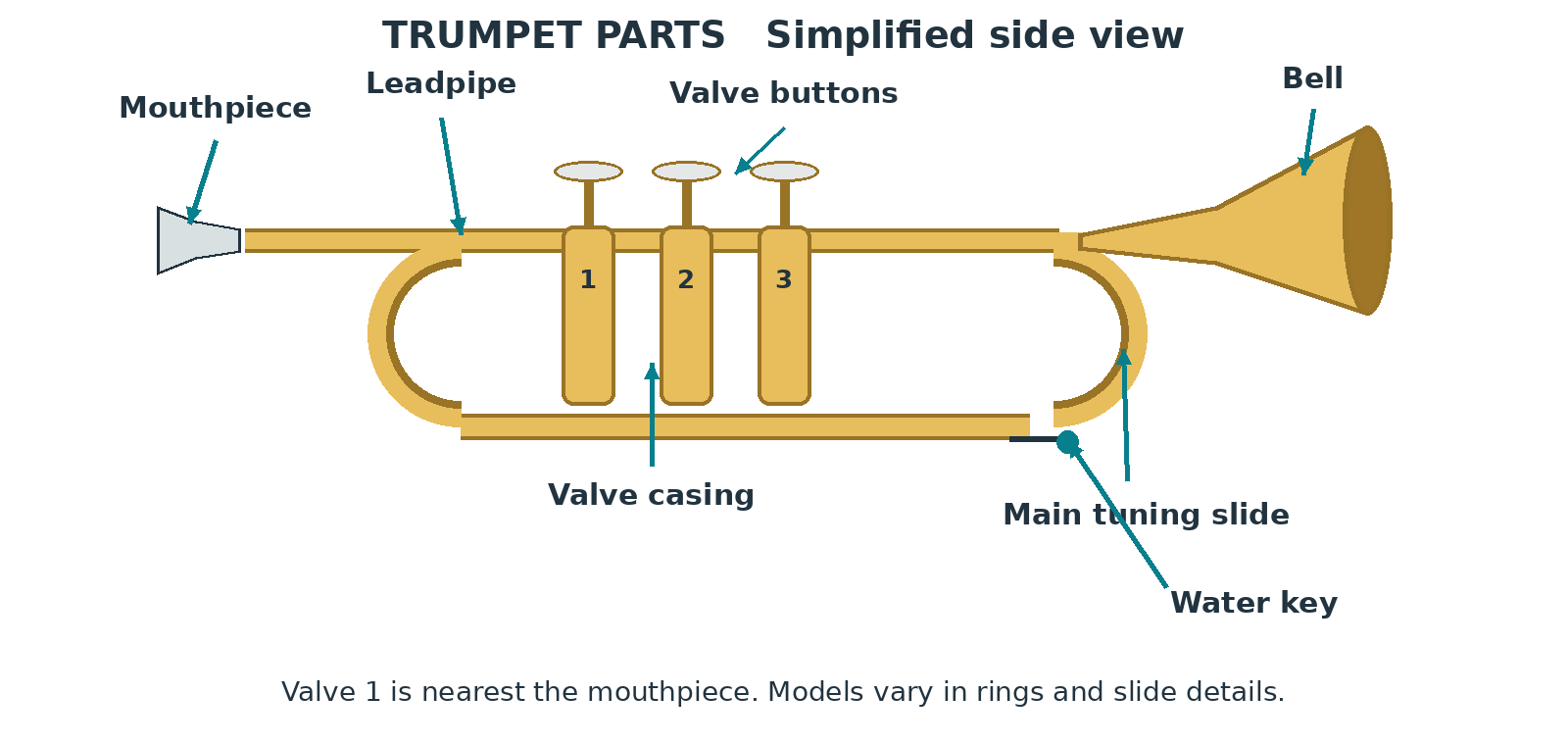
1. Find the mouthpiece, valves and bell.
2. Listen while your teacher plays a short phrase.
3. Air helps your lips vibrate and the instrument shapes the sound.
Listen: Notice the start and finish of each sound.
Check: Keep contact gentle. Use short attempts and generous rests.
LESSON 01 • PLAY AND CHECK
Try it yourself
1. Point to three parts and name them.
2. Describe the sound in your own words.
3. Draw the trumpet and label its bell.
Ready for more? Compare a quiet and a fuller teacher demonstration.
School connection: Describing sound practices observation and vocabulary.
○ I tried it ○ I can show it ○ I want help
One thing I noticed: __________________________
My next small step: ___________________________
LESSON 02 • LOOK AND TRY
Choose a comfortable setup
Prepare a space that suits your body.
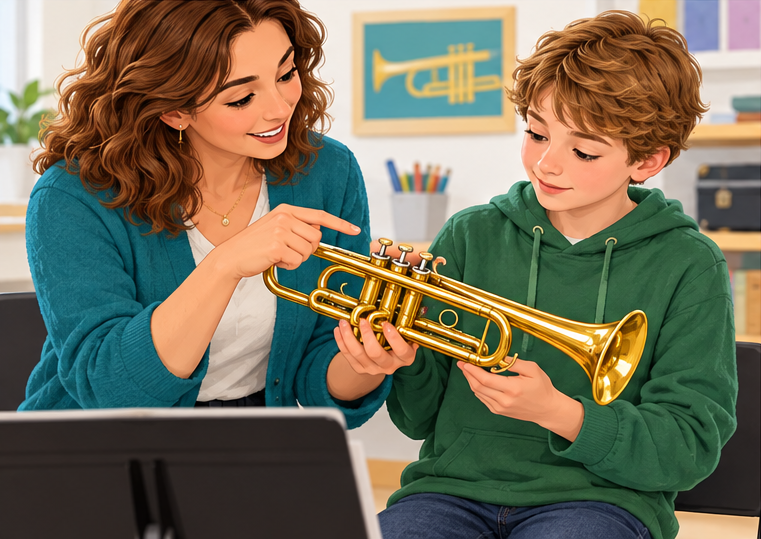
1. Ask your teacher to check instrument weight and hand reach.
2. Place a music stand where you can read without bending.
3. Make room for your bell and classmates.
Listen: A comfortable position helps you listen calmly.
Check: Keep contact gentle. Use short attempts and generous rests.
End of your free sample
You have read the free sample of Trumpet for Students (11 of 104 pages).
Buy the complete book as a PDF download for $7.99 (USD). Secure checkout with Stripe; your download opens right after payment and a receipt is emailed to you.